
This page presents Firefox usage statistics based on the visitors to WebDevelopersNotes.com. These stats are not the same as the global numbers (below) and would probably be different from what you collect from your web site.
A little history first. Internet Explorer was the winner of the first browser war during which it had given Netscape Communicator, the then undisputed leader, a drumming of a life time. Quickly Microsoft’s free pre-installed browser took hold of the web and at one point commanded almost 90% marketshare.
Sponsored Links
But then Firefox came along. Promoted by Google via Adsense and Google software pack, Firefox gradually started stealing users from Internet Explorer. Now we have a new web browser in the fray – Google’s Chrome; which, in less than 2 years, has got hold of 10% of the market.
In addition to presenting charts and graphs, I’ll try to address a few important questions on this page. How has Firefox been fairing after the release of Google Chrome? Will Chrome affect the market share of Firefox? How can Google promote two browsers at the same time?
Internet Explorer vs. Firefox usage statistics
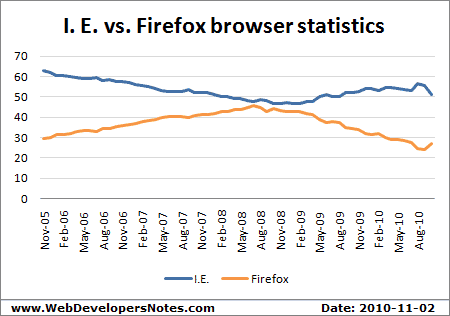
Though it was easy for Internet Explorer to banish Netscape Communicator to the depths of Hades, it has found a much tougher foe in Firefox. In fact, as shown by global stats, Firefox has steadily been eating into the share of the world’s most popular web browser. However, the picture is not the same when we consider traffic from only this web site.
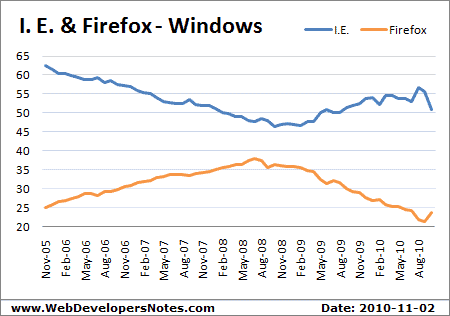
For WebDevelopersNotes.com, the Firefox usage had actually been decreasing since the mid of 2008… when Google Chrome was launched.
Firefox on the Macintosh system
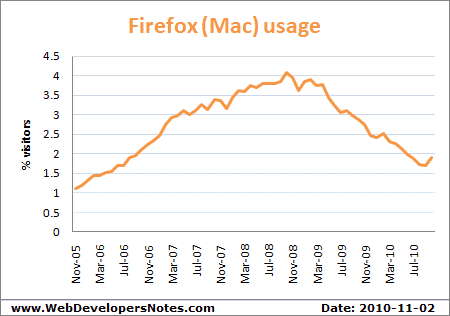
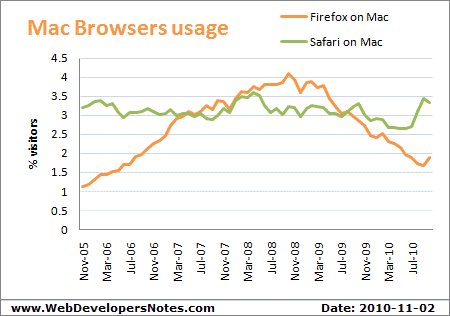
Just like the Windows operating system, the usage statistics of Firefox on Macintosh initially show a strong increase. This stable rise had actually helped the browser overtake Safari, the default browser on Mac, sometime around the first quarter of 2007. But around the same time (mid 2008) when Chrome was released, Firefox usage on Macintosh started falling.
Firefox and Google Chrome
The Chrome free web browser from Google was released on the 2nd of September 2008. In the very first month of its launch, this web site had more visitors using Chrome than Opera (another web browser, if you didn’t know). This is not surprising because any product from Google will definitely be met with a good response, especially from the web development community (the target audience of this web site).
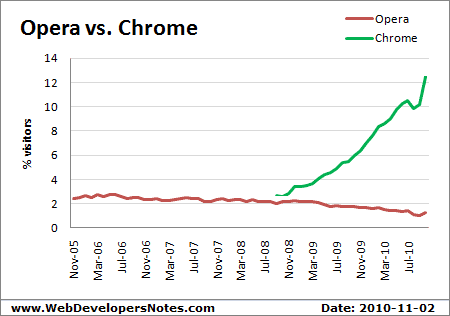
Google now has two browsers in its kitty. It has endorsed and promoted Firefox in the free Google software pack and via the Adsense program as a referral product. I believe, the major thrust in Google’s marketing of Firefox came when they added the browser as an Adsense referral product that publishers could promote and earn revenue from.
I also believe that the decrease in Firefox usage on this web site (inconsistent with the global stats) is primarily because of it’s users shifting to Chrome. Question: By launching Chrome, is Google in the danger of self-cannibalization for sites like mine? Holds true only if Google considers Firefox as its own product – but then, it has promoted it like its own baby… so…?
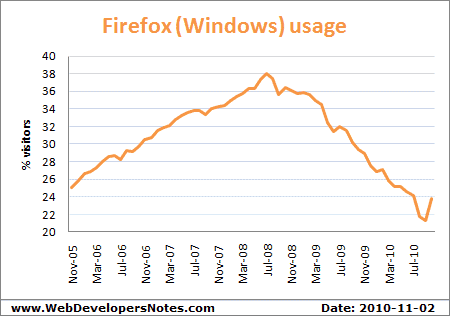
The coming years will present a clearer picture as to how the two – Firefox and Chrome – are going to exist together. Will Google’s clout help push its browsers into Internet Explorer’s territory or will they eat into each other’s share? A new kind of browser war is on the horizon, my friends, let us wait and watch.
Firefox global usage and comparison with Internet Explorer
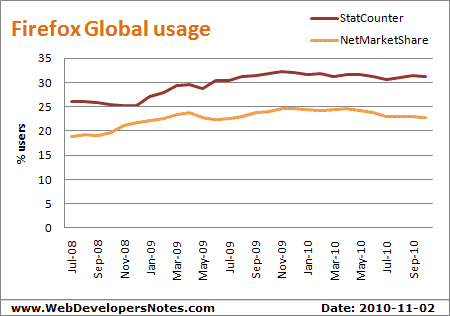
Statistics from StatCounter and NetMarketShare, two famous aggregators, show that the Firefox usage has been increasing at a slow pace. In contrast to what I found for this web site, the Firefox lines on the global graph went north close to September 2008 (the month Chrome was launched).
Updates
March 2, 2009
Looks like my guess was correct. The majority of Google Chrome users are ones who’ve shifted from Firefox (that includes me). Firefox still seems to be under pressure showing a gradual decrease in usage (on Windows) past 4 months. However, overall, Firefox line is steady and horizontal and the gap between this browser and Internet Explorer is the same.
In the last few months, Safari and Firefox seem to showing the same trend on Mac systems which looks kind of uncanny. Note: the release of Safari version 4 (beta) did push the line up a little and Firefox seems to copy that.
April 2, 2009
Definitely not a good month for Firefox. Its usage decreased on both Macintosh and Windows systems. Who benefits? Probably Internet Explorer whose numbers had shown the biggest jump in recent times. Google Chrome too gathered more followers. Unless someone points me in a different direction I’ll always attribute Firefox’s for Windows decrease in share (or at least some part of it) to Google Chrome. If the Chrome versions for Linux and Macs, which Google is apparently working on, dent Firefox’s share on these operating systems then I would have proved my point, right? I’ll be anxiously waiting for the future.
Now when I look at usage statistics for the past 13 months, Firefox’s share has declined! In fact the same is true for Internet Explorer. The two browsers that seem to have gained more users in the same time period are Safari and the newly launched Google Chrome.
June 8, 2009
For almost an year now, ever since it hit its peak in July of 2008, Firefox usage has steadily been coming down. And this month the sharp decrease as shown by the graph line is indeed a thing to worry about for people at Mozilla Corporation. The biggest gainer has been Internet Explorer which shows more than a 2% increase in usage. In fact, if we add up the numbers of Firefox and Chrome and pit them against those for Internet Explorer, the latter still wins… and handsomely.
Which means Chrome sharp rising line doesn’t help because its numbers are still very small. However, all this tells us that a trend is gradually emerging – unless something untoward happens, the top browsers in the coming couple of years will be (in order) Internet Explorer, Firefox and Google Chrome. Safari would soon be left behind just like Opera or would be restricted to Macs – my opinion.
September 10, 2009
Is Firefox on a recovery path? The graph line for this web browser has been dipping for months (overall). The line rose by a wee bit last month but dove down once again.
Who is harming Firefox… Chrome? Probably! And why do I say that?
The usage of the web browser on Macs increased a little this month but the overall showed a negative. It’s the Windows users (people like me), who are adopting Chrome and discarding F.F.
February 1, 2010
Firefox descent continues and it has lost ground on both Windows and Mac. The revival of Internet Explorer and the gradual gain by Chrome (the best web browser in my opinion) has really affected this open source program.
July 10, 2010
I suppose Firefox heydays are over. Chrome continues to grow and eat into its share and the onslaught of the new and improved (???) Internet Explorer is just too strong!