
On this page, I shall be presenting statistics of Windows web browsers. These are based on visitors to www.WebDevelopersnotes.com and might not be consistent with your web site for which the target audience might be different.
FYI, WebDevelopersNotes.com has articles, tutorials, resources, tips and tricks on web development and caters to a niche audience of wannabe and experienced web developers and this, as you can understand, definitely skews the stats. Even so, the stats can give decent insights and wouldn’t be far from the average web user.
Sponsored Links
Internet Explorer for Windows – statistics
Microsoft’s Internet Explorer is the world’s most used browser and its reign as the number one Windows browser continues on this web site. A little more than half of visitors to WebDevelopersNotes.com employ this program to surf the web. However, Internet Explorer usage has been decreasing steadily over the years especially globally!
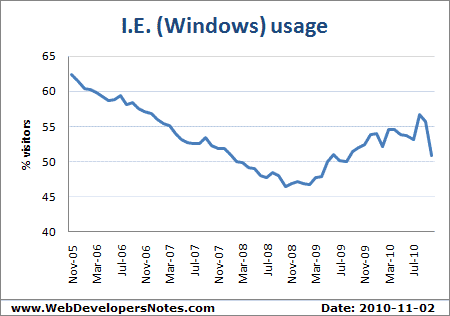
In the mid 1990s, Netscape browser was the most popular web browser. That’s because there weren’t any good alternatives. Then Microsoft launched Internet Explorer, which was not only free but also came bundled along with the Windows operating system. Thus, users had a choice of employing the in-built software or downloading and installing Netscape. No prizes for guessing the preferred path most people took.
Internet Explorer swiftly and mercilessly ate into the share of Netscape. By the beginning of the 21st century the first browser war had ended… it was more of a massacre and less of a war! Internet Explorer had butchered Netscape so badly that it could never again get a significant market share and was gradually pushed into oblivion.
Then came Firefox, the free and supposedly more secure browser, which has been giving Internet Explorer a hard time. The popularity and usage of Firefox continues to grow while I.E. lessens. This is the second browser war.
The new free browser from Google – Chrome is another player to watch out for. Though in the first few months of its release, Chrome has affected Firefox share more than Internet Explorer’s. A product from Google has high chances of becoming popular but with two browsers now in its kitty (it’s very own free browser Chrome and the “endorsed” Firefox), the company needs to be wary of self cannibalization.
Usage statistics of Firefox on Windows
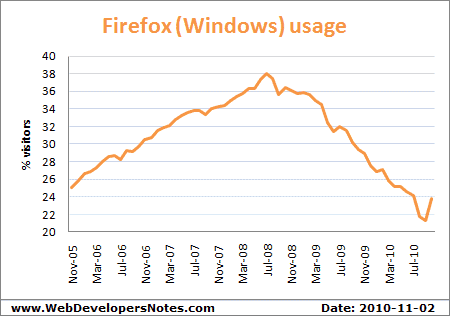
Firefox, the free web browser from Mozilla, continues to steadily increase its following globally. The increase in its usage statistics and popularity can be attributed to the strong support from the web development community and from Google who not only included it in the free software pack but also offered it as a referral product to thousands of publishers via the Adsense program.
A lot of Adsense publishers I know, loved to promote Firefox via banners and links because each download by a visitor from a referral link earned them a dollar. Also the online media frenzy and hundreds of blog posts that covered the launch of Firefox 3 created a sort of mysticism – if you are not using this browser you are surely missing out on a great program.
The capabilities of Firefox could also be extended with the help of add-ons and this was another reason why this web browser became a hit. There are tons of these plugins available for free that make surfing the web not only easy but much more productive.
Firefox vs. Internet Explorer web browser usage statistics
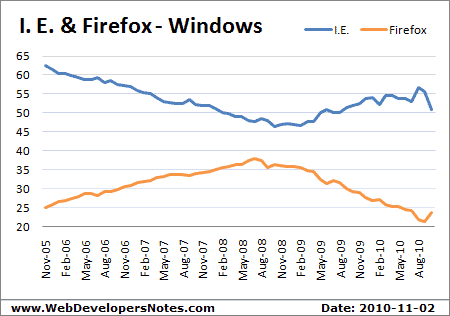
As mentioned above, on the Windows operating system, Firefox continues to eat into Internet Explorer’s share. The little blip we see for Firefox in the month of September 2008 might be attributed to Google’s Chrome (the browser was launched on the 2nd of that month). This probably means that more of Firefox users rather that those of Internet Explorer have given the new browser a try. Obviously, these are very early stages to jump to any conclusions; we must wait and watch for a year or so. But you can be sure that Firefox vs. Internet Explorer fight will continue.
Update: Since the advent of Google Chrome, Firefox usage has taken a nose dive on this web site. However, I don’t see this trend globally.
Windows Safari usage statistics
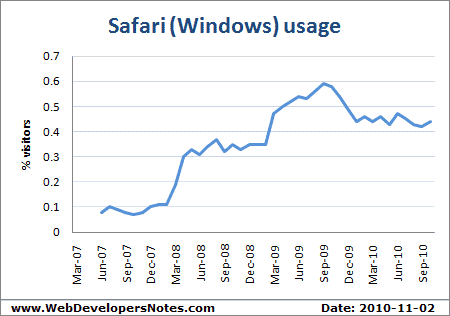
Though still relatively insignificant, my web site statistics also show an emergence of Safari for Windows. This browser was released by Apple for the Windows platform sometime near the middle of 2007. The usage of Windows Safari has increased but the usage of Safari on the Mac has decreased, its place taken by Firefox (for Mac).
Matt sends his feedback – The only reason Safari got a big(?) spike is because they snuck it into Apple Update and most computer users are too stupid to read what they’re hitting “OK” on.
Agreed, but a sneaky download and install is one thing and using the program, another… unless, of course, Safari was also made the default browser on installation.
Usage statistics for Chrome and Opera
Google Chrome was released on the 2nd of September 2008. This was a big surprise to many because Google was already supporting Firefox (and still is, at the time of writing). In fact, the free software pack from Google has Firefox but no Chrome.
Update: the Chrome web browser has now been included in the Google software pack. I guess this move was made on the 11th of December 2008 when Chrome came out of beta version.
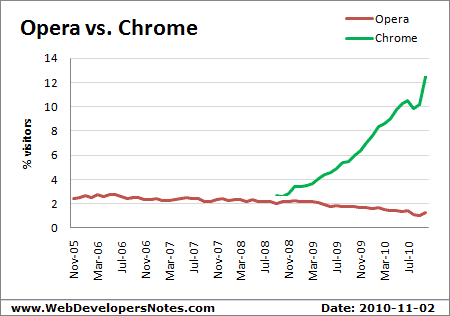
The good news for Chrome fans is that, in the very first month of its release, the browser went ahead of Opera. Now, I believe that Chrome users are primarily Firefox users and the new browser still needs to make strong inroads in the share of Internet Explorer.
Opera usage statistics have been steady with no major ups and downs though there has been a marginal but perceptible decrease over the last 3 years.
Other web browsers for Windows
The numbers for other web browsers for Windows were negligible; there is no use in discussing browsers that brought in only a handful of visitors.
Updates
March 2, 2009
Apple released Safari version 4 (beta) which resulted in an overall increase in the usage, though, not substantial. However, on the Windows operating system, the line was horizontal.
Firefox continues to suffer with Chrome blues – Firefox for Windows hasn’t risen.
Google Chrome had a minimal increase while Internet Explorer usage has kind of remained constant.
April 2, 2009
Launch a new browser and the usage increases! That seems so true for Internet Explorer whose share jumped more than a percentage point this month which should have given Microsoft developers reasons to cheer. But which browser’s share did Internet Explorer snatch? It seems the finger points to Firefox whose usage declined by a similar amount – the graphs lines for the two browsers seem to be diverging. Another big angle was displayed by Safari for Windows that can again be attributed to the release of the new browser version (check note for previous month). My favourite, Google Chrome, is slowly increasing its share.
June 8, 2009
There was a marked increase in the usage of Internet Explorer this month – a jump of more than 2%. And the browser that took the hit was Firefox; it not only lost percentage points to I.E. but also to Chrome. Google’s web browser has shown the maximum gain in a month since the time of its launch. It probably still remains as the most popular web browser with more than twice the number of users than Opera. All-in-all a very bad month for Firefox and a good one for Internet Explorer.
September 10, 2009
Internet Explorer’s recovery has been curtailed in the past few months. The most notable was the steady increase of Chrome which incidently completed one full year – the Google’s free web browser was launched on the 2nd Of September 2008. Although I have been updating Chrome usage statistics every month, because of the anniversary, I’ve added some fresh information to the post. Take a look at it if you are interested.
Also, it will be interesting to see how the two, Opera and Chrome fare up, now that Opera version 10 has been launched with the company keeping its fingers crossed. I understand that Opera is a nifty web browser but it lacks the visibility that Chrome has enjoyed being a Google product. You don’t need a soothsayer for predicting the winner: Chrome!
February 1, 2010
Always happy to see Chrome (the best web browser – my opinion), climbing up in usage statistics. Firefox still is in troubled water. Seems the introduction of a new operating system (Windows 7) has increased Internet Explorer usage – it’s now at 2 year old levels.
July 10, 2010
Google Chrome is the only web browser to have shown a bit of growth this month. The usage of all other Windows based browsers has either ended flat or decreased!