On September 2nd 2008, Google released a beta version of their shiny new free web browser – Chrome. I was on the way back to India (Yay!) on the 6:00am flight from Dallas to JFK (to board the international flight) and saw it splashed all over newspapers.
The week before I was with my very good friend too busy to go through my emails (forget RSS feeds)… the news blew the haze out of my eyes. I guess other developers around the world would have been surprised too! Why was the world’s favourite search engine launching a web browser when there were pretty good programs in the market already!
Sponsored Links
Update: On the 11th of December, Google removed the beta label from the Chrome web browser because their goals for stability and performance have been met
– read more about it in The Official Google Blog. In the offing is an extensions platform and Mac and Linux versions (and I’m waiting for that to happen).
Update: Chrome is now available for Macs and Linux operating system.
Download the free Chrome web browser from Google – http://www.google.com/chrome. The installation is very easy and straightforward but if you need step-by-step instructions, please refer download and install Google Chrome.
What is Google’s aim in releasing Chrome?
The first question I asked myself – why has Google released a free browser when it supports Firefox which is a good product? FYI, at the time of writing, Chrome is still not a part of the Google software pack collection. [Update: Chrome has now been included in the Google software pack]
Why do they want to flood the market with similar products just to eat into Internet Explorer’s share? I am sure the great marketing pundits have enough theories on this to fill a big fat book. The point is, by releasing a free web browser; Google has thrown itself in the ring with Microsoft. This might be the start of round 1.
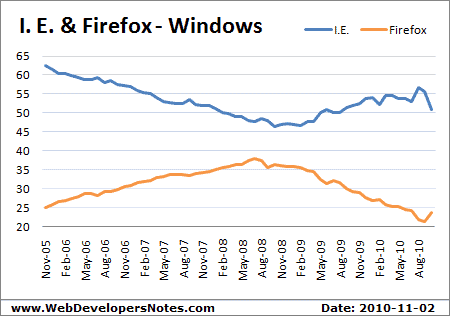
Come to think of it, round 1 of the fight between Google and Microsoft had already started when the former endorsed Firefox… hmmm. On Windows operating system, Firefox has been steadily eating into the market share of Internet Explorer. The the graph below is based on visitors to this web site and doesn’t paint a pretty picture for Firefox especially in the last two years. However, the global usage graph for Internet Explorer and Firefox shows the complete opposite.
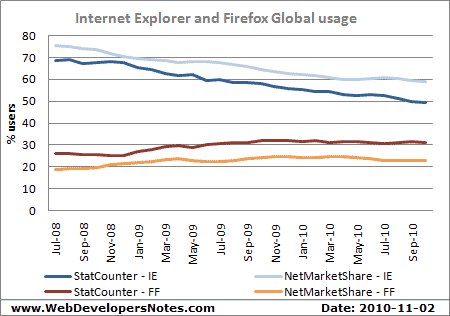
The free Firefox is a cross-platform web browser while Chrome is available only for Windows, at the time of writing. Update: Chrome is now available for all popular operating systems.
This definitely means that Google is trying to confront Internet Explorer head on. However, the numbers from my web site show that Firefox users are more likely to switch to Chrome. The share of Internet Explorer fell by 2.55% while Firefox was more adversely affected showing a 4.05% decrease since the launch of the Google browser. Bear in mind that I.E.’s share was decreasing anyway while Firefox was on the rise.
In my opinion, the one important reason for launching a new web browser would be to get a stronger hold of web search. As we all know, Google has been the world’s favorite search engine for years. A leader always has to put in extra efforts and keep a close watch on any upstarts.
It’s vital for Google to put in extra efforts and come up with products and services that, directly or indirectly, cater to web search, their core product. This would not only help in their advertisement program but also help them in bettering the results for the billions of queries the Google search engine processes each month.
Usage statistics for Chrome
In the first two months of the launch of Chrome, my web site has been getting a steady stream of visitors who use this web browser. Their number is still very small, only 2.6%. Please note that these figures are for this web site and might not be consistent with yours.
A not-so-startling fact: the sheer clout of Google makes sure that Chrome beats the Opera browser (on my web site) in the very first two months of release! I’ll keep a close watch on this and post updates when something “new” happens.
Update April 2009: While checking the usage statistics of the various Windows based web browsers for the past 12 months I realized that both Internet Explorer and Safari have shown a decrease in usage (percentage-wise, of course). The two browsers who seem to have benefitted are Google Chrome and, surprisingly, Apple Safari!
Update June 2009: Google Chrome numbers continue to rise and have shown the biggest jump since the time of launch. The chunk of Chrome users are those who have switched over from Firefox which had a dismal performance these last 30 days. In fact, except for a couple of months, the Firefox graph line has been coming down consistently in 2009. Firefox usage reached a peak in July 2008 and has slowly been declining. The strong gainer has been Internet Explorer. You can see the diverging I.E. and F.F. lines in the first figure on this page.
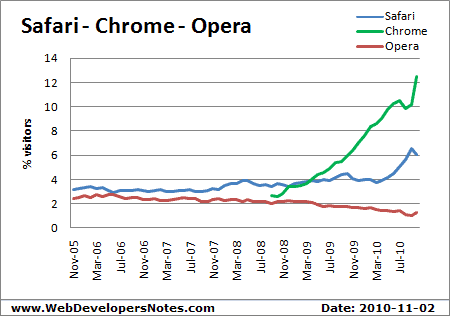
December 2008: usage comparison of Chrome and Opera
As per statistics of this web site (above), the free web browser from Google had beaten the nifty Opera in the very first month of release. But will Chrome be an also ran just like Opera? That remains to be seen. I have a feeling that Chrome would find Firefox a stronger competitor than Internet Explorer. It may also happen that Internet Explorer’s share would continue to lessen with Firefox and Chrome increasing in popularity.
However, Chrome has beaten Opera hands down. Google needs to spin some magic to make Chrome more popular – offer some features that set it apart from the rest especially Internet Explorer if they are targeting the share of the world’s most popular web browser. Or Chrome might go the Opera way – a small sized great looking browser with tons of features (they are the ones who introduced tabs).
Too many questions and too early to say anything. Let us wait and watch.
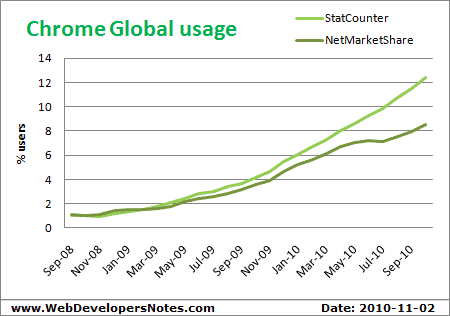
Chrome usage – global stats
Global statistics from NetMarketShare and StatCounter have shown that in less than 2 years Chrome has taken a little more than 10% marketshare. Awesome, isn’t it? Take note that the industry is already crowded with two bellwethers – Internet Explorer and Firefox. Chrome has now overtaken both Apple’s Safari and Opera.
I’ve been using Chrome since October 2008, a month after it was launched and yes, I do consider it the best web browser.
Update
June 8, 2009
Chrome shows highest gain since launch. Firefox loses a big slice to Internet Explorer. Are we seeing a revival of the native Windows web browser? We should expect some interesting things in the future when Windows 7 comes out. However, a clear trend is surely emerging – the browser war in the future will have three players I.E., F.F. and Chrome. It seems unlikely today that Chrome will be able to fight with the biggies but I have faith in my trusted and recommend browser.
March 2, 2009
Looking at the graphs 6 months after the release of Google Chrome web browser it does seem that the majority of its users have migrated from Firefox. Firefox usage on Windows has shown a gradual decrease which is so much in contrast to the ever climbing line we were seeing earlier for the browser. The gap between Internet Explorer and Firefox remains the same.
September 10, 2009
Chrome completes one full year! Yes, the free web browser from Google was launched in 2008 September and has gathered a large and loyal following very quickly. In fact, Chrome usage statistics show that the browser had overtaken Opera in the very first month. So where is Chrome heading? Inching its way to the top, what else? The beta releases for both Macintosh and Linux systems are bound to push the web browser and I suppose the statistics for coming months will be really interesting.
February 01, 2010
Chrome has left the other two – Safari and Opera – far far behind. It’s now the third most popular web browser – this proves that an extremely good software can still make inroads in a supersaturated market.
July 10, 2010
Unbelievable!!! Based on the poll we conducted, Firefox (the leader) rakes in only 7% more votes than Chrome, the free web browser from Google. Users are really showing their love for this program!